 Single Vial Peptides
The July 2026 peptide vote is not an FDA approval
People are already shortening the July 2026 meeting into "the FDA approved the peptides." The people who counted the votes do not say that. This page quotes them. It does not add a tally of its own, because FDA's meeting page, content current as of August 6, 2026, still describes the session in the future tense and does not print a vote count.
What FDA's own page says a committee vote is
On the meeting page for July 23–24, 2026, FDA writes: "Advisory committees make non-binding recommendations to the FDA, which generally follows the recommendations but is not legally bound to do so."
The same page names what the committee was asked to discuss, and the use FDA reviewed for each substance. On July 23: BPC-157 (free base) and BPC-157 acetate for ulcerative colitis; KPV (free base) and KPV acetate for wound healing and inflammatory conditions; TB-500 (free base) and TB-500 acetate for wound healing; MOTs-C (free base) and MOTs-C acetate for obesity and osteoporosis. On July 24: emideltide for opioid withdrawal, chronic insomnia, and narcolepsy; semax for cerebral ischemia, migraine, and trigeminal neuralgia; epitalon for insomnia.
That chart is the assignment. It is not a finding that any substance works for the use next to its name. CJC-1295 and ipamorelin are not on it.
What MedPage and Pharmacy Times say the committee did
Joyce Frieden, Washington editor at MedPage Today, July 23, 2026, last updated July 24: "In a series of 8-6 votes (with one abstention), the panelists recommended that the free base and acetate forms of BPC-157, KPV, and TB-500 be placed on the agency's 503A bulk drugs compounding list, which allows pharmacies to make compounded versions. The panel also voted 7-5 (with two abstentions) in support of MOTS-c."
The deck on that article says the votes went "against agency scientists' recommendation to keep them off the compounding list."
Nicole Lou at MedPage Today, July 24, reported the second day. Epitalon and semax "received favorable votes of 7-5 and 8-5 (with one abstention each), respectively, for both free base and acetate versions." "Only emideltide received a majority of no votes at 7-6 (with one abstention) for both its free base and acetate versions." She sums the two days as six of seven peptides recommended for the bulk list.
Mohammed Chammout, PharmD, in Pharmacy Times, published July 29, 2026: "BPC-157, KPV, and TB-500 each cleared on an identical 8-6 split with 1 abstention. MOTS-c passed 7-5 with 2 abstentions, the tightest margin of the 4 peptides reviewed on day 1." On day 2 he writes that emideltide "failed 6-7, whereas epitalon and semax both passed." His count of the split matches MedPage's, read from the other side of the same vote. He then writes the sentence the headlines skip: "Six of 7 made it through. None of them is legal to compound yet."
What committee members said the yes vote was, and was not
MedPage quotes Tennessee state senator Bobby Harshbarger, PharmD, speaking on emideltide: "Of course, this vote doesn't approve a drug or indication. It permits patient-specific compounding under a valid prescription, not mass production for unidentified consumers or routine copying of commercially available drugs."
That sentence is his account of a yes vote on emideltide, the peptide the committee did not recommend. It is still the clearest line in the coverage about what a yes vote is not. It is not an approval of a drug.
MedPage also quotes members who disagreed with each other about safety.
Todd Durham, PhD, the consumer representative, voted against adding BPC-157. MedPage quotes him on "a lack of evidence for efficacy for ulcerative colitis, and at the very least some suggestion of potential harm should people be exposed to this substance over the long term." He added, in the same report, "There are other available therapies for the proposed indication."
Melissa Loseke, DO, voted yes. MedPage quotes her reason: "I would like to see some tighter restrictions -- APIs [active pharmaceutical ingredients] from U.S.-based pharmacies only, patient registries, and mandatory side effects reporting." In the same article she describes a patient who brought her a peptide. Her words: "Just last week, I had a patient whose [peptide] that they brought to me was laced with MDMA and ecstasy." That is her report about a product a patient brought her. It is not a test of a vial from this shop, and this shop does not adopt it as a description of research vials in general.
John Hertig, PharmD, during the public comment period, is quoted by MedPage: "We are at the risk of undermining the integrity of our entire FDA approval framework based on safety and effectiveness." MedPage then reports his point in its own words: a place on the compounding list could create a parallel pathway to get a product to the public with less rigor and fewer science-backed studies. The quoted sentence is his. The pathway line is MedPage's summary of him. The shop is not a party to that argument. Both lines are here because people are already repeating them.
What the pharmacists and the lawyers say has not changed
Chammout's article opens with the line he says he uses when a patient asks if this is "legal now": "Nothing is legal today that wasn't legal 2 weeks ago." His key takeaway is stricter: "PCAC passage for BPC-157, KPV, TB-500, MOTS-c, epitalon, and semax does not alter current legality; 503A Bulks List updates require formal FDA rulemaking before compounding is permitted." He also writes that the headlines have mostly said some version of "FDA Approves Peptides," and that this "is incorrect."
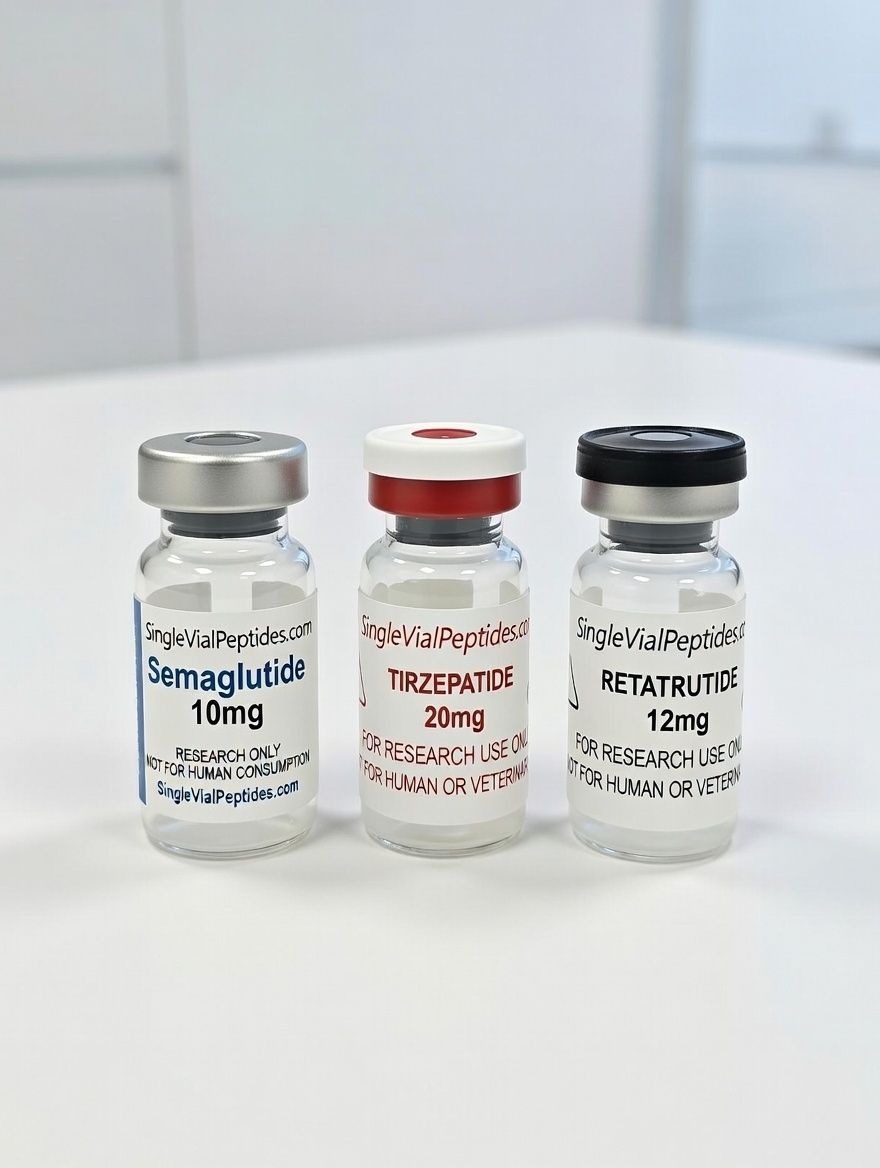
He separates three things patients collapse into one. FDA-approved peptide drugs, and he names semaglutide and tirzepatide as the examples. A future compounding category, which he says is not a drug approval even if FDA later finalizes a recommendation. And "unregulated gray-market products," which is where he says most patients asking about BPC-157 are actually getting it. This shop is in the third conversation only in the sense that the vial is labeled research material. It is not sold as a compounded prescription, and it is not sold as semaglutide or tirzepatide.
MedPage's second-day piece says the same structural point in one sentence: "While the FDA is not required to follow the advice of its advisory committees, it typically does." Frieden's July 23 piece ends on the same observation: "The agency doesn't have to heed the advice of its advisory committees, but it usually does." A habit is not a rule that has already been signed.
Charles D. Snow and Karla L. Palmer at Hyman, Phelps & McNamara, writing on April 21, 2026, before the meeting, said the July session was "likely a necessary procedural step, not the finish line." Their words: "PCAC's recommendation is non-binding, and formal rulemaking is what comes next." They also wrote that the peptides headed to that meeting "were never on 'Category 1.'" Category 1, in their account, is the interim list of substances that may be used in 503A compounding when the substance is not a component of an approved drug and has no USP monograph. Removal from a restriction list is not the same thing as landing on the list that permits compounding.
What the category list itself shows
FDA's 503A category file, the document that lists substances nominated for compounding under section 503A, puts two relevant lines in Category 1, "Bulk Drug Substances Under Evaluation." One is "GHK-Cu (except for injectable routes of administration)." The update on that file says that line "was removed from category 1 on April 22, 2026, because the nominations for GHK-Cu were withdrawn by the nominators." It then says that on May 5, 2026, one nominator clarified that it had meant to withdraw only the injectable route and to keep the nomination for non-injectable routes, and that "GHK-Cu (except for injectable routes of administration) will be added back to category 1." The same paragraph says: "FDA has announced it intends to consult the Pharmacy Compounding Advisory Committee (PCAC) before the end of February 2027 regarding the potential inclusion of GHK-Cu on the 503A bulks list."
Category 1 on that file is "under evaluation." It is not the 503A Bulks List. The file also lists "Nicotinamide Adenine Dinucleotide (NAD)" and the reduced disodium form, NADH, in Category 1. NAD is not a peptide. It was not one of the seven substances on the July agenda.
BPC-157, KPV, TB-500, and MOTS-c do not appear in Category 1 or Category 2 on the file opened for this note. Category 2 on that file is a short list: cesium chloride, domperidone, germanium sesquioxide, ibutamoren mesylate, kisspeptin-10, and quinacrine hydrochloride for intrauterine administration. Absence from those two printed lists is not a secret third status invented here. It is what the document shows, and it matches Chammout's line that the July vote has not placed them on the bulks list.
The February 2027 sitting is also in MedPage. Lou writes: "An additional five peptides will be considered when PCAC reconvenes in early 2027, according to an announcement during Friday's meeting." Snow and Palmer, in April, named the five FDA had already announced for that later meeting: GHK-Cu, Melanotan II, cathelicidin (LL-37), dihexa acetate, and pegylated mechano growth factor (PEG-MGF). GHK-Cu is the only one of those five that this shop sells.
CJC-1295 and ipamorelin were not on the July chart and they are not in that list of five. Snow and Palmer write that a lawsuit over Category 2 placement "dealt specifically with four peptides: AOD-9604, CJC-1295, Ipamorelin acetate, and Thymosin Alpha-1." This note does not add a vote count for those four. No vote record for them was opened.
What that means for a vial on this shop
Wolverine, on this shop's label, is one vial of BPC-157 10 mg and TB-500 10 mg, sold for $75. The committee took those two names separately. A nickname does not merge two votes. GLOW is GHK-Cu 50 mg, BPC-157 10 mg, and TB-500 10 mg, at $80. KLOW adds KPV 10 mg, at $85. None of those blends was a line on FDA's July chart.
The single vials are the same substances under their own names. BPC-157 5 mg is $35, or two for $60. TB-500 5 mg is $35, or two for $60. KPV 10 mg is $40. MOTS-c 10 mg is $35, or three for $100. GHK-Cu 50 mg is $35. CJC-1295 (no DAC) with ipamorelin, 5 mg of each, is $40. NAD+ is $35 for 500 mg, or $60 for 1000 mg. Purity on a research vial here is at least 99 percent. Fill is within 10 percent of the labeled weight. Buyers are 21 or older. The material is not for people or animals.
A research label is the disclosure. It is not a compounded prescription, and it is not an FDA-approved drug. Chammout's three-way split is the useful one: an approved brand, a compounded prescription if FDA someday finishes a rule, and a research vial. This shop sells the third, and says so on the vial.
The papers on each substance are quoted on their own pages, including BPC-157, TB-500, KPV, GHK-Cu, Wolverine, GLOW and KLOW, MOTS-c, and CJC-1295 with ipamorelin. The BPC-157 and TB-500 notes quote FDA's briefings, which recommended against adding those substances. The committee later voted the other way. A briefing is the staff recommendation. A vote is the committee's recommendation. Neither one is the rule.
CNN, Fox, NPR, Scientific American, The Guardian, Reuters, and the Johns Hopkins Hub wrote the plain-language versions of what people claim these peptides do. Those quotations are in What CNN, Fox, and the other outlets wrote. A news sentence is still not an approval.
Sources
- FDA, Pharmacy Compounding Advisory Committee meeting page for July 23–24, 2026, content current as of August 6, 2026. https://www.fda.gov/advisory-committees/advisory-committee-calendar/july-23-24-2026-meeting-pharmacy-compounding-advisory-committee-07232026
- FDA, bulk drug substances nominated for use in compounding under section 503A. https://www.fda.gov/media/94155/download
- Joyce Frieden, MedPage Today, July 23, 2026. https://www.medpagetoday.com/publichealthpolicy/fdageneral/122328
- Nicole Lou, MedPage Today, July 24, 2026. https://www.medpagetoday.com/publichealthpolicy/fdageneral/122345
- Mohammed Chammout, PharmD, Pharmacy Times, July 29, 2026. https://www.pharmacytimes.com/view/what-the-peptide-vote-actually-changes-at-my-counter-hint-not-much-yet-
- Charles D. Snow and Karla L. Palmer, Hyman, Phelps & McNamara, FDA Law Blog, April 21, 2026. https://www.thefdalawblog.com/2026/04/fdas-peptide-rally-what-compounders-and-industry-need-to-know-post-1-of-2/
Research vials. 21 and older. Not for people or animals.
Viales de investigación. 21 años o más. No es para personas ni animales. No es consejo médico.