 Single Vial Peptides
Two names, one chemical, and a pill collecting diagnoses
Mounjaro and Zepbound are both tirzepatide, made by Eli Lilly. Same company. Same weekly strengths on the box, from 2.5 mg through 15 mg. The Zepbound label even carries "Initial U.S. Approval: 2022," the year tirzepatide first got a yes, because the active ingredient is the one that was already approved. The powder in the pen did not get a second identity. The paperwork did.
Mounjaro is the diabetes name. Lilly's Mounjaro label is the type 2 diabetes product. Zepbound's label is two other sentences: reduce excess body weight in adults with obesity, or overweight plus a weight-related condition, and treat moderate to severe obstructive sleep apnea in adults with obesity. The label also says not to take it with another tirzepatide product or with any other GLP-1 drug. Two brands at once is not the plan. Two brands on the shelf is the plan.
The second name is a claim form
Insurers do not pay "tirzepatide." They pay a brand for a diagnosis. A plan that covers diabetes drugs and excludes weight-loss drugs can say yes to Mounjaro and no to Zepbound for the same molecule. Sleep apnea is a third door on the Zepbound label. A plan that will not buy "weight loss" will sometimes buy a sleep-apnea drug. The chemical walks through whichever door the form names.
That is also how a miss fails to hurt the franchise. Each use is its own yes. A study that flops, or a payer that balks, sits on that use. The diabetes approval does not get erased because a weight-loss headline went bad, and the weight-loss approval does not get erased because a later add-on study comes back empty. The company keeps the yes it already has. A new diagnosis is upside. A failed diagnosis is a file they close.
Lilly's own Zepbound price page shows what the split is worth. The list price, the wholesale number, runs from $499 to $1,086.37 per fill, using the January 1, 2026 wholesale figure Lilly cites. The cash price Lilly will take directly from a person is lower, and it depends on the strength: $299, $399, $499, then $699 for the 10 mg, 12.5 mg, and 15 mg fills. With commercial insurance that actually covers the drug, Lilly's card can bring a fill down to $25. Medicaid, Medicare, and the other government programs are excluded from that card. The diagnosis picks the brand. The brand picks the card. The card picks who is allowed to use it.
Mounjaro has its own card and its own price page. The number a person pays still depends on whether the plan treats the prescription as diabetes.
Novo split the name too. Medicare glued it back together.
Novo Nordisk sells semaglutide as Ozempic, as Rybelsus, and as Wegovy. Those are not identical pens. The labeled strengths and the approved uses differ. The trick is the same one. Diabetes has a name. Weight has a name. A pill has a name. A plan can cover one and refuse the others.
Medicare's price negotiators refused to play. For the 2027 round, CMS put all three on one line: Ozempic; Rybelsus; Wegovy. From November 2023 through October 2024, Medicare Part D spent about $14.4 billion on that line, for about 2.3 million people. The negotiated price CMS published for a 30-day supply in 2027 is $274, against a 2024 list price of $959. That is the government saying the brand names are one drug when the government is the one writing the check. CMS fact sheet, negotiated prices for 2027.
Novo then moved the sticker. On February 24, 2026 the company said that on January 1, 2027 the list price of Wegovy, Ozempic, and Rybelsus goes to $675 a month, which it described as about a 50 percent cut for Wegovy and about a 35 percent cut for Ozempic. The same announcement said the self-pay prices people already use were not part of that cut. Novo Nordisk, February 24, 2026.
The new pill's study list is a midlife chart. The approval is one line.
Foundayo is orforglipron, Lilly's once-daily GLP-1 pill. The FDA approved it in 2026 for a narrow job: reduce excess body weight, with diet and activity, in adults with obesity or overweight plus a weight-related condition. That is the indication on the Foundayo label.
Lilly's own description, in a May 22, 2026 release, adds the wishlist. Besides weight, Foundayo is being studied for type 2 diabetes, obstructive sleep apnea, osteoarthritis knee pain, hypertension, peripheral artery disease, and stress urinary incontinence. Lilly, May 22, 2026. Read that list again. Weight. Blood sugar. Snoring that stops breathing. A knee that hurts. Blood pressure. Legs that do not get enough blood. A bladder that leaks. Lilly has also reported weight loss with the pill in women before menopause, during it, and after it. That analysis is about the scale. It is not an approval to treat menopause.
That wishlist is not brenipatide, and it is not eloralintide. Those are two other unapproved Lilly programs. The long alcohol, smoking, and mood list is the one that starts with B. The one that starts with E is an amylin drug aimed at weight. Brenipatide is the list. Eloralintide is the E.
Studied is not approved. A midlife checklist on a press release is a stack of future claim forms. Each one that lands becomes another door into an insurer, the same way sleep apnea became a second sentence on Zepbound. Each one that misses leaves the weight approval standing. The company has said the quiet part in the structure, even if the press release sounds like medicine.
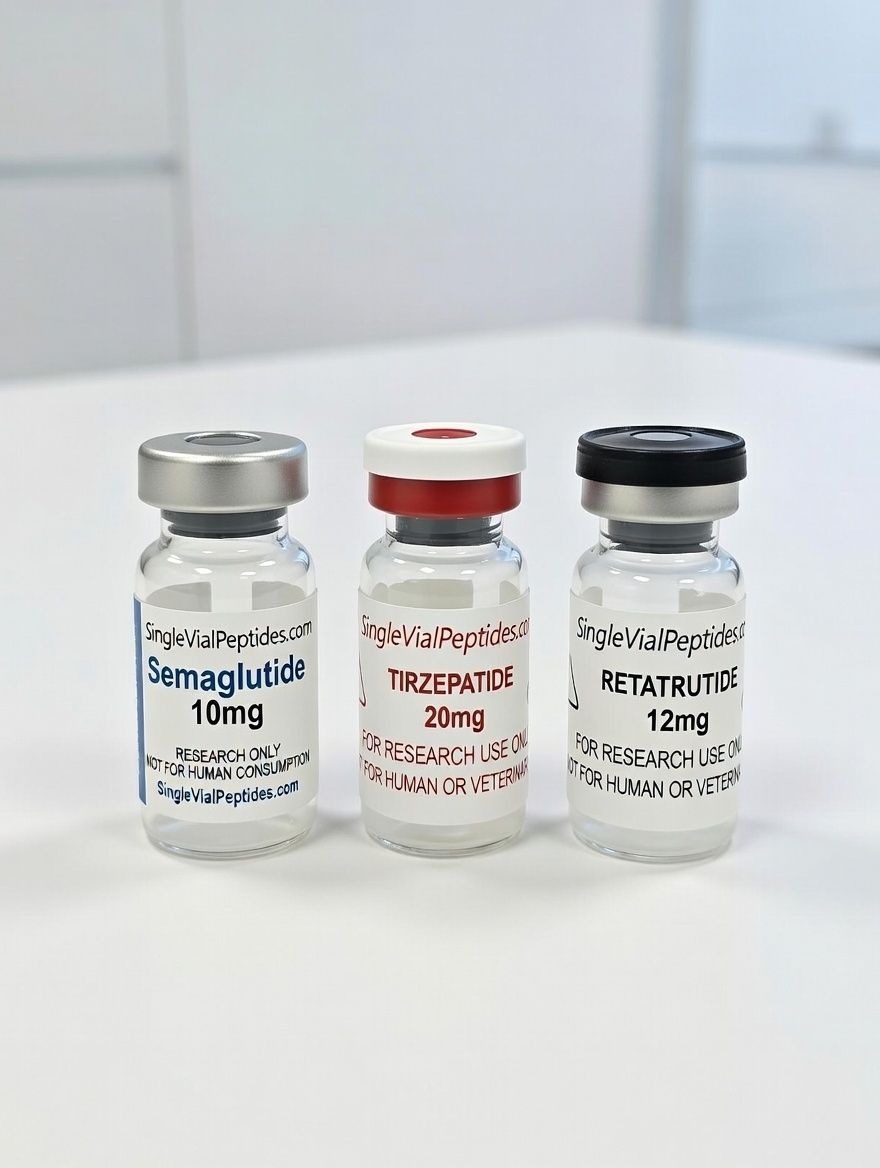
The research vials on this shop are none of these products. They are not Mounjaro, not Zepbound, not Ozempic, not Wegovy, and not Foundayo. Research use only. Adults 21 and older. Not for people or animals. This page is a reading of their labels and their price sheets. It is not a diagnosis, and it is not a suggestion to pick a disease so a plan will pay.
Sources:
- Mounjaro prescribing information
- Zepbound prescribing information
- Zepbound cost page
- Foundayo prescribing information
- Lilly on Foundayo, May 22, 2026, including the list of studies
- CMS, drugs selected for 2027 negotiation, January 17, 2025
- CMS, negotiated prices for 2027
- Novo Nordisk list-price announcement, February 24, 2026
Research vials. 21 and older. Not for people or animals. Not medical advice.