 Single Vial Peptides
Compounded and research are different paperwork on a shared bulk market
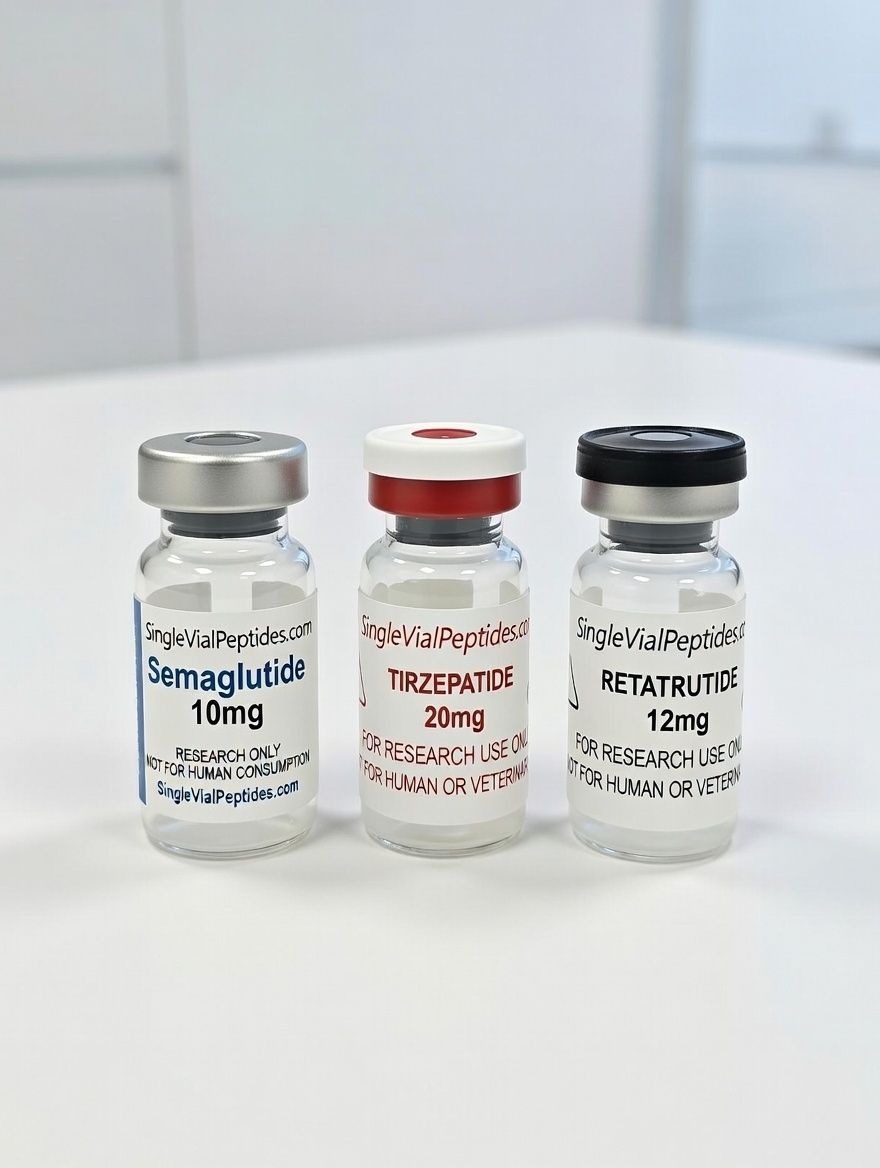
A compounded semaglutide or tirzepatide prescription and a research vial with the same name on the label are not the same object. One is dispensed by a pharmacy under a prescription. The other is a dry research material with a labeled weight. The overlap is upstream. U.S. import records show the bulk ingredient entering the country for both uses, often from foreign manufacturers, and sometimes under a declaration that does not match the shipment.
What the import record shows
On September 5, 2025 the FDA announced a "green list" import alert for GLP-1 active pharmaceutical ingredients. Ingredients from facilities the agency has inspected or evaluated, and that appear to meet manufacturing standards, can proceed. Ingredients from other sources are subject to detention without a physical exam. The FDA said the step was aimed at foreign-made bulk used in compounded GLP-1 drugs, and it repeated earlier concerns about compounded semaglutide and tirzepatide: dosing errors, salt forms that are not the ingredient in the approved drugs, and adverse events, some of which required hospitalization. FDA, September 5, 2025. The alert is Import Alert 66-80.
On November 12, 2025 the FDA told importers that some GLP-1 entries were being misclassified, or falsely declared "for research purposes" or "not for human consumption." The same bulletin describes two different filings for this ingredient class. A pharmacy-compounding entry may be asked for a certificate of analysis and other laboratory data. A research-and-development entry, coded for laboratory testing and non-human use, may be asked for a statement of the research, a quantity that fits that research, and an affirmation that the product will not be put into commercial distribution. FDA filing bulletin, November 12, 2025.
That is the documented version of the sourcing question. The FDA's notices describe this bulk as foreign-made. A separate count of shipment records, cited below, names China, Hong Kong, India, and Canada. The paperwork then sorts the ingredient into a compounding entry or a research entry. A false research declaration is one of the practices the FDA said it was seeing.
A May 1, 2026 FDA warning letter to Harbin Jixianglong Biotech describes a related problem one step downstream. The firm had been placed on the green list, then shipped semaglutide to the United States that it had purchased from a facility not on that list, labeled as if Harbin had manufactured it. The FDA wrote that naming the shipper instead of the actual manufacturer may have been a way around the import alert. The firm was later removed from the green list. FDA warning letter, Harbin Jixianglong Biotech, May 1, 2026. A manufacturer name on a document is not, by itself, proof of who made the batch.
The requirements are different. The marketing words often are not.
A compounded product, when it is what the statute describes, comes from a state-licensed pharmacy for an identified patient, or from an outsourcing facility registered with the FDA. The pharmacy path is tied to a prescription. The outsourcing-facility path can be office stock without a named patient. Either way it is a prepared product. It is not an FDA-approved drug. The FDA does not review it for safety, effectiveness, or quality before it is sold. Sterile compounding has written standards, and an import filed as pharmacy compounding can be asked for laboratory data.
A research vial has no corresponding FDA grade. "Research grade," "pharmaceutical grade," and "third-party tested" are not defined testing tiers for these products. A certificate of analysis is meaningful when it names the laboratory, the method, the batch, and the manufacturer. A badge that says "tested," with none of those, does not establish which requirement was met. The Partnership for Safe Medicines, in its February 2025 review of import records, noted that a certificate of analysis often does not identify the FDA-registered manufacturer of the bulk ingredient. That observation is about the document, not a test of every vial.
The practical difference for a buyer is the label in hand.
- A compounded preparation should name a pharmacy, a patient prescription, and a concentration.
- A research vial on this shop names a compound and a milligram weight. The specification stated here is purity of at least 99 percent and a fill within 10 percent of that labeled weight. That is this seller's specification. It is not an FDA batch release, and it is not a compounding record.
Salt form is a separate line on either kind of label. The FDA has said semaglutide sodium and semaglutide acetate are different active ingredients from the base form in the approved drugs. That point is written out in Lilly's pen is the base.
Why the warning articles sound alike
Public warnings about compounded GLP-1s and public warnings about research peptides use the same set of claims: the product is not the approved pen, the bulk may be foreign, quality was not reviewed the way an approved drug is reviewed, and harm has been reported. Those claims overlap because the import descriptions overlap. They do not prove that a particular pharmacy vial and a particular research vial came from the same lot.
The pages below are the record, including the sharper ones. The author is named so the interest is visible.
- FDA, concerns with unapproved GLP-1 drugs. The agency's own page on compounded products, salt forms, dosing errors, and border detention.
- FDA, green list announcement, September 5, 2025. Foreign API and detention of unverified sources.
- FDA statement, February 6, 2026. The agency said it intended to act against mass-marketed unapproved GLP-1 drugs, including compounded products sold as substitutes for the approved drugs.
- Partnership for Safe Medicines, February 20, 2025. An advocacy group, working with a former director of FDA criminal investigations, reported 239 semaglutide or tirzepatide shipments from unregistered facilities between September 2023 and January 2025. Of those 239, the count was 60 from China or Hong Kong, 42 from India, and 49 from Canada. The group said 195 of the 239 were allowed in, and that many were marked for compounding. The same written analysis, filed with the House Oversight Committee, describes research-labeled sales as a parallel market. Written statement, April 9, 2025. This is an interested reading of government shipment data, and it is written in alarm language.
- TechTarget, July 25, 2025, on a Center for Medicine in the Public Interest report. Reports unregistered foreign API, including shipments labeled for research, used by compounders.
- BioSpace, September 24, 2026, on the FDA warning letter to Empower Pharmacy. A compounding inspection, not a research-vial case.
- FIDJ, December 20, 2024. A law-firm summary of five FDA warning letters. Four, to Xcel Research, Prime Vitality, Summit Research Peptides, and Swisschem, involved a research-use claim. The fifth, to Verony, involved oral products presented as FDA-approved.
- TrimRX, red flags when buying compounded GLP-1s. A clinic marketing page. It warns patients away from anything labeled for research and treats that label as disqualifying.
Read those pages for the facts they cite. Weigh the author at the same time. A brand-aligned safety group, a clinic that sells one of the two categories, a law firm, and the FDA are not saying the same thing for the same reason. The shipment facts they point at are still shipment facts.
An approved pen, a compounded prescription, and a research vial remain three different things. This shop sells the third. Research material. Adults 21 and older. Not for people or animals. Not a compounded drug and not a Lilly or Novo product.
Sources, in addition to the links above:
Research vials. 21 and older. Not for people or animals. Not medical advice.