 Single Vial Peptides
What scientists mean by peptide
The plain version of this word is What is a peptide?. This page is the one with the science words, once.
A short chain, with a number on it
The National Human Genome Research Institute, updated October 12, 2026, defines it this way: "A peptide is a short chain of amino acids (typically 2 to 50) linked by chemical bonds (called peptide bonds). A longer chain of linked amino acids (51 or more) is a polypeptide. The proteins manufactured inside cells are made from one or more polypeptides." Peptide.
An amino acid is the building block. The same institute says there are 20 different amino acids, and that a protein is one or more chains of them. Some amino acids the body can make. Others, the essential ones, have to come from food. Amino acids. MedlinePlus says the same idea in fewer words: amino acids are molecules that combine to form proteins, and they are building blocks of life. Amino acids. That page was reviewed January 21, 2025.
Their narrator, Sara Chandros Hull, uses a Lego brick. Each brick is an amino acid. A few bricks locked together are a peptide. A much longer chain is a polypeptide. Proteins are those chains, folded into shapes. The brick story is an analogy. The 2-to-50 line is the definition.
A peptide bond is only the name of the link between two of those bricks. It is not a product, and it is not a step.
The peptide people mean when they say Ozempic
MedlinePlus, reviewed May 18, 2026, explains the class behind the famous pens. Glucagon-like peptide-1, shortened to GLP-1, is a natural hormone released by the gut after a meal. On that page, the hormone does three things. It signals to the brain that you are full. It tells the pancreas to release insulin, which helps regulate blood sugar. It slows how quickly the stomach empties. GLP-1 agonists.
A GLP-1 agonist, in their words, is a man-made hormone that causes many of the same actions. They write that these medicines were first made to help people with type 2 diabetes control blood sugar, and that they also lead to weight loss because they reduce appetite, reduce food cravings, and slow digestion. They also write that the medicines alone cannot treat diabetes or obesity, and that many people regain lost weight if they stop. Those sentences are about the approved medicines. They are not a result for a research vial.
The same page lists semaglutide as Ozempic, Rybelsus, and Wegovy, and tirzepatide as Mounjaro and Zepbound. It describes the approved products as injections on a daily or weekly schedule, or as a pill. This note does not copy that schedule. A schedule for a named pen is the pharmacy label, not a number for a dry vial. The brand split for tirzepatide is two names, one chemical. The three prices, brand and compound and research, are three different products.
MedlinePlus lists side effects of the agonists, including nausea, vomiting, and diarrhea, and names pancreatitis and gallbladder disease as rare. It says the agonists are not recommended for pregnant women, for people with a history of medullary thyroid cancer, or for people with a family history of multiple endocrine neoplasia type II. That is the encyclopedia's caution about the medicines. It is not a personal medical opinion from this shop, and it is not a reason to invent a dose.
Retatrutide is not on that approved list. Lilly's drug is still unapproved. The record this shop quotes is Retatrutide is still not approved.
What that science does not turn a vial into
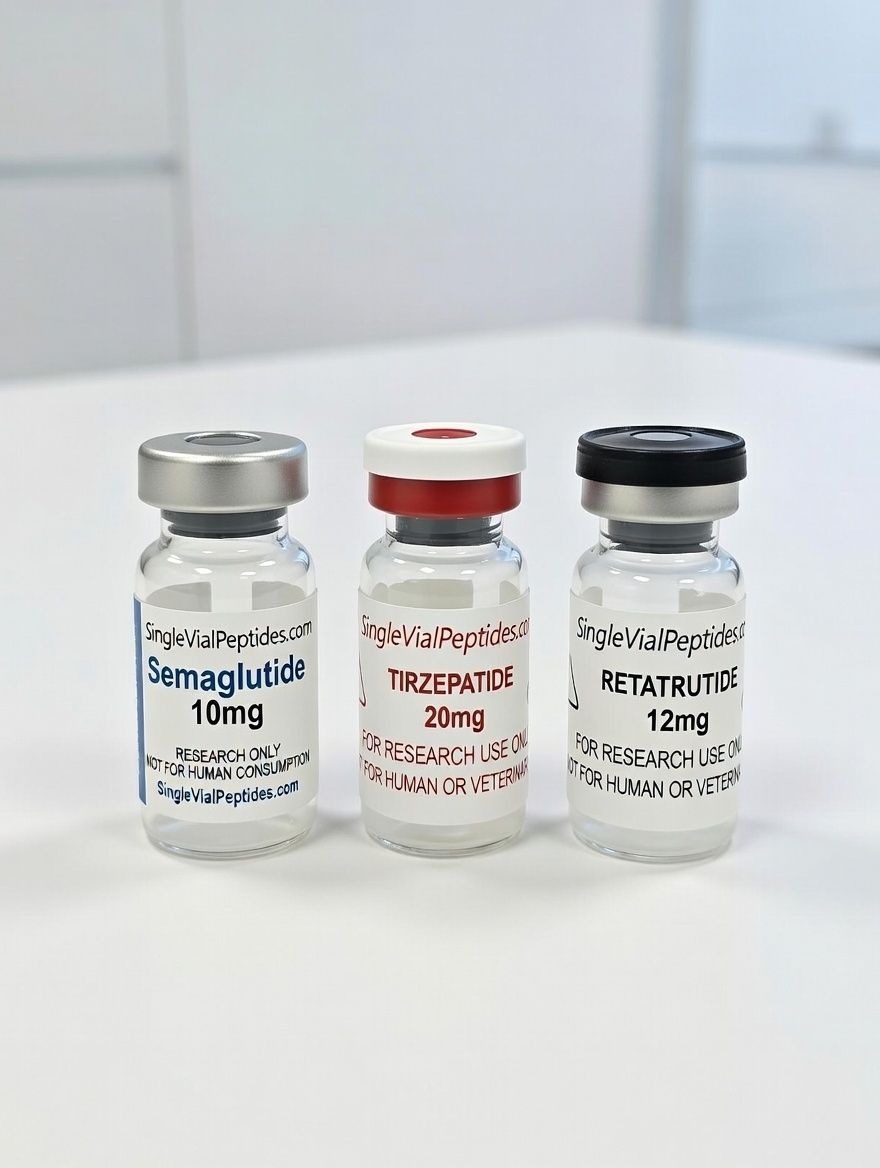
Sema on this shelf is semaglutide as a research vial. It is not Ozempic, Wegovy, or Rybelsus. Tirz is not Mounjaro or Zepbound. Reta is not an approved pen, because that pen does not exist yet. The other names in the shop, BPC-157, TB-500, GHK-Cu, and the rest, are peptides or blends under this same chemical definition. They are not GLP-1 drugs, and the MedlinePlus page does not review them.
A research vial is dry powder in one sealed bottle, at least 99% pure, fill within 10% of the label. Adults 21 and older. Laboratory research only. Not for people or animals. Not a pharmacy. Not medical advice. Research use.
Fiale di ricerca. Dai 21 anni in su. Non per persone o animali. Non è un consiglio medico.