 Single Vial Peptides
What the record says about NAD+
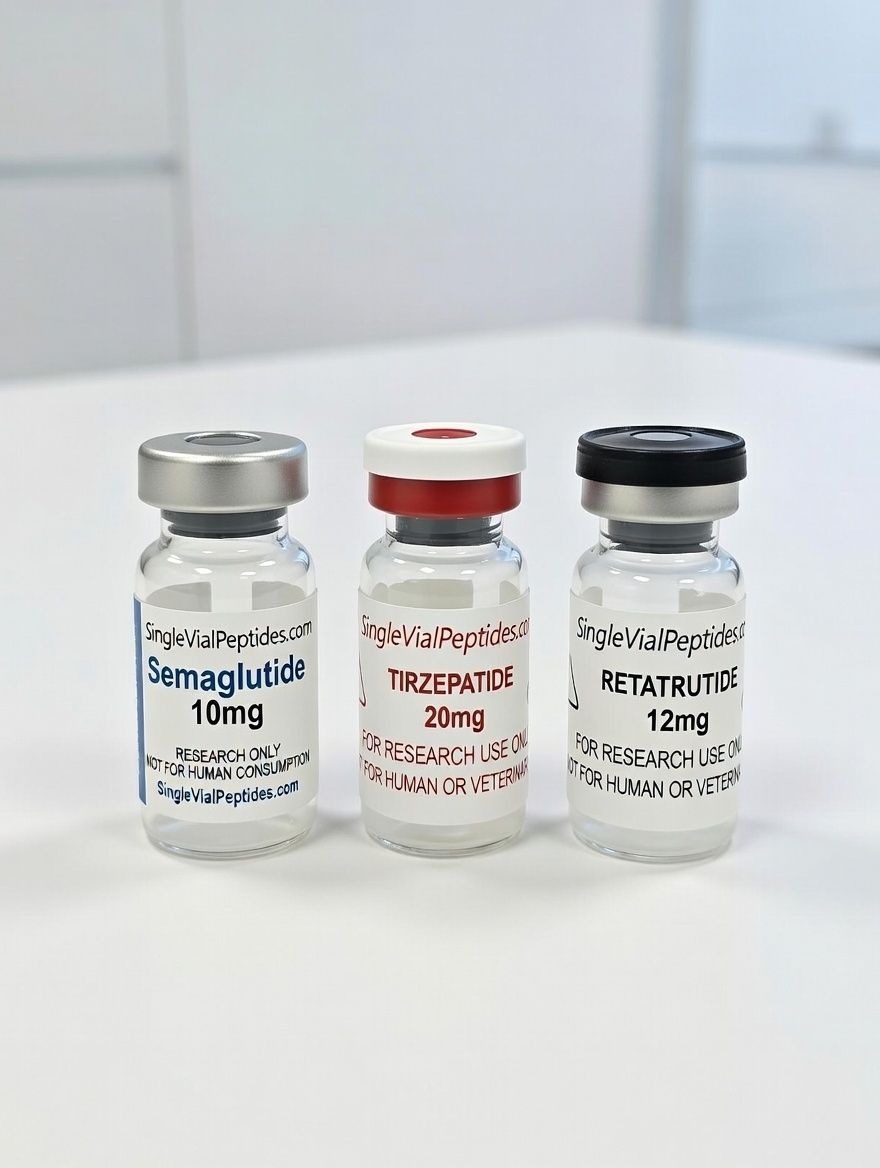
NAD+ shows up in the same chats as research peptides. The page opened for this note does not describe a peptide. This note stays with one clinic page that was opened for this article, then states what this shop actually sells. It does not turn that page into a schedule.
The page is Cleveland Clinic's health-library entry, "NAD (Nicotinamide Adenine Dinucleotide)," medically reviewed and last updated on February 26, 2026. The address is https://my.clevelandclinic.org/health/body/nad-nicotinamide-adenine-dinucleotide. Sentences below that describe the molecule are quotations or close paraphrases of that page. Shop sentences are separate, and they are marked as shop sentences.
What NAD+ is, on the page that was opened
Cleveland Clinic writes: "NAD stands for nicotinamide adenine dinucleotide. It's a tiny molecule found in every cell in your body." The same section says NAD "helps your cells make energy by carrying electrons from one chemical reaction to another."
The clinic's anatomy section says NAD is made of three main parts. Nicotinamide "accepts and donates electrons" and "is the part that switches between NAD+ and NADH." Adenine "is a molecule also found in DNA" and "helps NAD interact with enzymes inside cells." "Two sugar-phosphate groups" "connect nicotinamide and adenine, forming the structure of the molecule."
That parts list is not a chain of amino acids. On the clinic's own description, NAD+ is a small molecule built from nicotinamide, adenine, and sugar-phosphate groups. It is filed on this shop beside peptides because people search for it that way. The chemistry on the page that was opened is not peptide chemistry.
The clinic also says the body makes NAD from precursors, "including forms of vitamin B3 (like niacin) and the amino acid tryptophan," and that cells "can create NAD from scratch or recycle it from smaller molecules." The same page says food "doesn't contain meaningful amounts of NAD directly." That is a description of ordinary metabolism. It is not a food plan, and it is not a claim that a dry vial replaces a meal.
NAD+ and NADH, in the clinic's words
The opened page separates two forms. "NAD+ is the 'oxidized' form. It's sometimes called the 'empty' form because it's ready to accept electrons during chemical reactions." "NADH" is "NAD with hydrogen," "the 'reduced' form," "the 'full' form because it's carrying electrons that can be used to make energy."
"Together, NAD+ and NADH act like a shuttle. They move electrons back and forth so your body can turn food into energy." The function section says one of NAD's most important roles "is helping to convert the food you eat into usable energy," and that "this process happens largely in the mitochondria, often called the 'powerhouse' of the cell."
The same function list, still in the clinic's wording, names other roles. "DNA repair: NAD helps enzymes fix damage to your genetic material." Metabolism: "It supports chemical reactions that break down nutrients." Cell protection: "NAD helps limit harmful byproducts that can build up when cells are under stress." Teamwork: "It supports the normal function of your muscles, brain cells, heart cells and bones."
Those lines describe the molecule the clinic is writing about. They are not measurements taken on a vial from this shop. This article does not add a mechanism the page did not state.
What that page says about NAD+ and aging
Under conditions and disorders, Cleveland Clinic writes: "As you age, NAD levels naturally decline. Some cells begin using NAD more quickly than your body can replace it, lowering overall levels." It then says that with less NAD available, "cells may have a harder time making energy and repairing damage." It says lower NAD levels "have been linked to" age-related changes, and it lists muscle weakness and fatigue, eye conditions, metabolic disorders including type 2 diabetes and obesity, heart issues, and cognitive decline. "Linked to" is the clinic's verb. This note does not upgrade it to "causes."
The clinic says researchers "continue to study how NAD levels may affect aging." On the care section it says research "is ongoing on the effectiveness of NAD+ supplements. They may help restore energy and cell repair as you age, but more studies are needed." That is a caution on a public health page about supplements. It is not evidence about a research vial, and this shop does not tighten it into a promise.
The same care section lists ordinary habits and foods. This article does not reprint that list as advice.
What the NAD+ vials on this shop are
These sentences are shop facts, not clinic findings.
The catalog lists two dry research vials. NAD+ 500mg is $35. Five of those vials are $150. The page is NAD+ 500mg. NAD+ 1000mg is $60. Five of those vials are $250. The page is NAD+ 1000mg. The catalog names are "NAD+ 500mg" and "NAD+ 1000mg." The full name on both is "NAD+."
The milligram number is the labeled weight of the material in the vial. It is not a dose. Two sizes are two labeled weights. They are not two schedules, and this note will not convert either number into one. Purity on these vials is at least 99 percent. Fill is within 10 percent of the labeled weight. They are research material, sold to adults 21 and older. They are not for people or animals. This shop is not a pharmacy. Nothing on this page is medical advice.
A reader who wants the clinic's account of the molecule should use the clinic's page. A reader who wants the object for sale should use the vial page. Those are different documents. The first does not mention this shop. The second does not become a medicine because the first page exists.
What this NAD+ note will not do
The opened page does not set a human amount, a schedule, or a way to prepare a vial. This article will not invent those. It will not describe mixing, and it will not describe injection. It will not treat the clinic's list of linked conditions as a list of uses. It will not treat the sentence about supplements and "more studies" as a result for this powder.
No second chemistry source is quoted here. A PubChem record and an American Chemical Society note were not available as opened pages when this was written, so their wording is not used. If a claim about NAD+ is not in the Cleveland Clinic page above, or is not a shop fact of the kind just stated, it is not a claim of this article.
What the peptide headlines do not cover
NAD+ is not a peptide. The CNN, Fox, Guardian, NPR, Scientific American, Verge, Reuters, and Johns Hopkins pages opened for What CNN, Fox, and the other outlets wrote do not run a NAD+ item. A peptide headline is not borrowed for this coenzyme. The clinic page quoted above remains the opened clinical source.
Sources on NAD+
Cleveland Clinic, "NAD (Nicotinamide Adenine Dinucleotide)," medically reviewed, last updated February 26, 2026. https://my.clevelandclinic.org/health/body/nad-nicotinamide-adenine-dinucleotide.
Catalog prices checked against `catalog.py` in this project before publication: NAD+ 500mg at 3500 cents, five for 15000 cents; NAD+ 1000mg at 6000 cents, five for 25000 cents.
Research vials. 21 and older. Not for people or animals.
研究用瓶。21 岁及以上。不用于人或动物。不是医疗建议。