 Single Vial Peptides
How to read a research-vial label
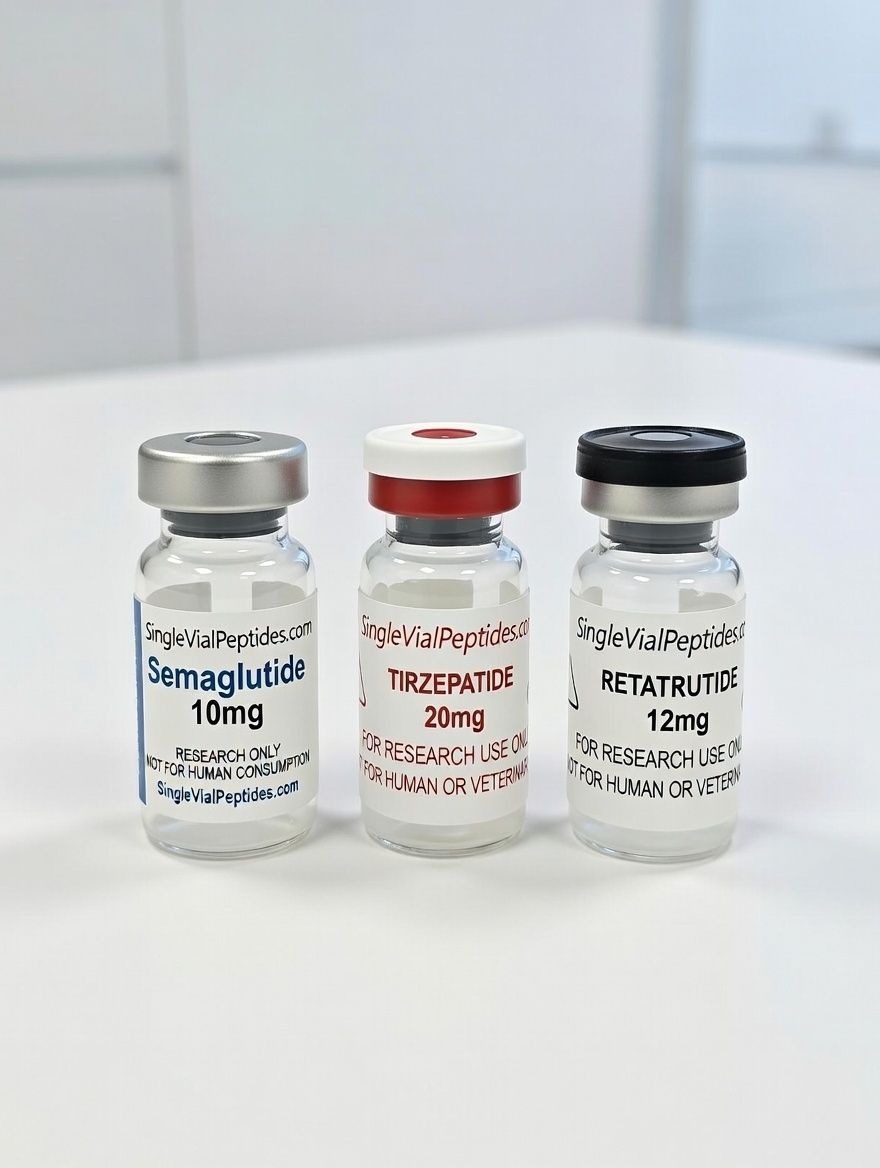
The bottle is small. The label is the whole contract. Read four things. Ignore the nickname in the video.
The name. The name is the compound in the vial. Tirz, reta, and sema are talk. The label should say the full name of what you ordered. If the glass does not say the name you meant, you are holding the wrong bottle. Stop there.
The milligrams. A milligram is a weight. One gram is 1,000 milligrams. The number on a Single Vial label is the labeled amount of dry material. It is not a liquid volume. It is not a mark on a syringe. It is not a calendar. A vial marked 10mg is a 10 milligram label. That is all that number means, before the fill window underneath it.
The purity. Purity asks what share of the material is the named compound. On these research vials, purity is at least 99 percent. At least 99 percent of the material is that compound. The rest can be leftover from making it. Purity does not say the bottle is heavy or light. A very clean powder can still miss the printed weight.
The fill. Fill is the weight in the vial compared with the printed number. The fill here is within 10 percent of the label. Ten percent of 10 is 1. A 10mg label means somewhere from 9mg to 11mg. A 5mg label means 4.5mg to 5.5mg. A 20mg label means 18mg to 22mg. Same rule. Different sticker. The longer split between those two ideas is purity and fill.
People mash the words. They hear 99 percent and decide the vial is exactly 10.000 milligrams. It is not. Ninety-nine percent is what the powder is. The 10 percent window is how much powder is in there. You need both. One does not cover the other.
What this label is not
An approved drug label is a different object. The agency has reviewed an indication, a strength, and the instructions for that finished product. This label has none of that.
If a doctor or a pharmacy handed you their product, their label wins for that product. If the thing in your hand is a Lilly pen, read Lilly, not a research-vial sticker: lilly.com. The FDA does not translate this sticker into a dose. The promise is narrow on purpose. Name. Milligrams. At least 99 percent pure. Fill within 10 percent. That is the deal. It is not a wink that the vial is an approved medicine.
The number you type
The mix calculator uses numbers you type. It does not pick them. It does not pick a schedule. It does not hand you a set of instructions.
Here is the catch the label is for. If you type 10 because the label says 10mg, you typed the middle of the window. You did not type a promise of 10.000. The vial may hold 9mg. It may hold 11mg. Both sit inside the fill rule. If the volume of liquid stays the same, the strength of that liquid moves with the weight. The low end is about 10 percent under the label. The high end is about 10 percent over it.
The calculator shows what you type. It will not quietly swap in 9 or 11. Type the low end and the high end yourself if you want to see the swing.
Concentration is milligrams divided by milliliters. If you do not know the milliliters, the milligram number cannot become a concentration. Do not borrow that second number from a stranger. The stranger's video does not show your fill, and it does not show your name on the glass.
Read the name out loud. Read the milligrams. Remember that a 10mg label means 9mg to 11mg. Remember that 99 percent is purity, not weight. Then decide. The label will not decide for you.
Vials on singlevialpeptides are research material, for adults 21 and older, not for people or animals.
Fiolki badawcze. Od 21 lat. Nie dla ludzi ani zwierząt. To nie porada medyczna.