 Single Vial Peptides
Collagen powder and a face cream are not this vial
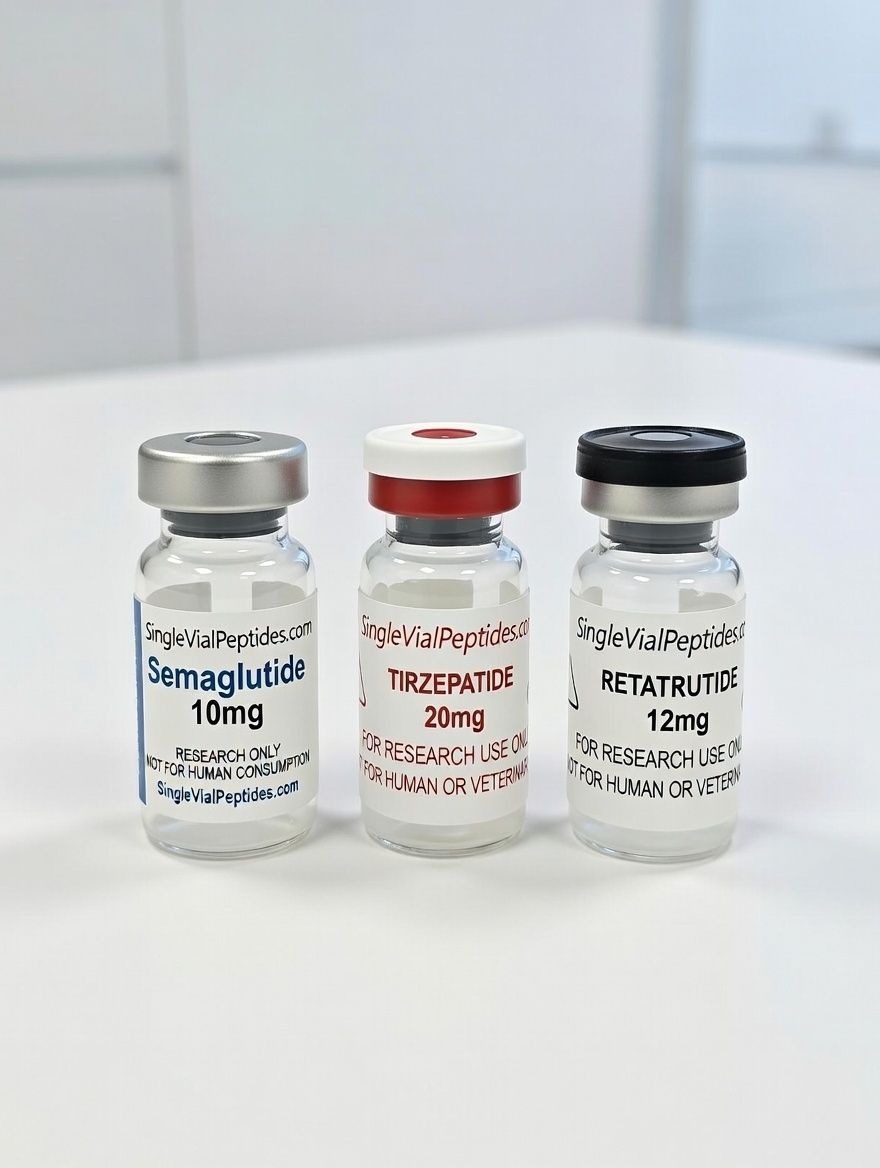
Search "what are peptides" and the pages that rank are usually a powder stirred into coffee, or a cream. This shop sells neither. This note is only the difference.
The short chemistry definition is What is a peptide?. The version with the 2-to-50 count is what scientists mean.
The powder
Cleveland Clinic published What Are Collagen Peptides? And Do They Work? on June 8, 2026. Registered dietitian Beth Czerwony, RD, LD, says: "Collagen peptides are supplements that aim to help your body replace some of its lost collagen."
The clinic calls collagen the most abundant protein in the body. On that page it helps hold the body together by giving structure to skin, bones, muscles, tendons, ligaments, and connective tissue. The page says the body starts making less of it as early as the 20s. Czerwony's line is: "By age 40, you're likely losing about 1% of your collagen each year."
The same page says collagen peptides are also called hydrolyzed collagen or collagen hydrolysate. They are broken-down collagen, sold as powders or capsules, commonly made from beef, pork, or fish. The clinic says the research is still evolving and the results are often conflicting. It describes studies that suggest possible effects on skin hydration and flexibility, joints, bones, and muscle. Those sentences are about a food supplement. They are not a result for a research vial.
This shop does not sell collagen powder. It does not sell a scoop for coffee.
The page also says the U.S. Food and Drug Administration does not test or approve collagen peptides, and that a person who chooses one of those supplements should look for NSF Certified for Sport or USP Verified. That sentence is about the powder and the capsule. It is not a certificate for this shop. We do not publish a certificate of analysis here. The purity rule we do state is what 99% and 10% mean.
Czerwony's closing line is "At worst, they may not work." The clinic says to talk with a healthcare provider before starting a supplement. That is their advice about the powder. This note does not copy any gram amount from that page, and it does not turn their supplement caution into a number for a vial. The page also says marine collagen may not be appropriate for someone with a fish allergy. That is about the fish powder, not about a labeled research vial.
The cream
A different Cleveland Clinic page, Peptides for Skin Care: Are They Worth It?, is dated July 31, 2024. Dermatologist Wilma Bergfeld, MD, is talking about strings of amino acids added to skin care products. The page's picture is building blocks. Loose blocks are amino acids. A short tower is a peptide. A castle is a protein. The theory on that page is elastin and collagen in the skin.
Bergfeld says: "Peptides can be anti-inflammatory, and chronic inflammation damages the tissue in your skin." She also says that just having peptides in a skin care product does not necessarily mean they will be their most effective, and that "with some of your less expensive or newer brands, the level of cosmetic chemistry can be lacking." Her basics line is: "Really, the basis of skin care is to cleanse, moisturize and reduce sun exposure." The next sentence on the page is that the rest is optional. She names hyaluronic acid and retinoids as ingredients she considers effective and less expensive. Those lines are about a jar. This shop does not sell the cream, and this note is not a skin routine.
GHK-Cu is the name that gets mixed up, because creams and vials both use it. The cream studies and the outlet lines are quoted on what papers say about GHK-Cu. A sports note records a USADA example of a cosmetic ingredient, Tripeptide-1, and says a research vial of GHK-Cu is not that cream. Peptides banned in sport. The bottle on this shelf is GHK-Cu, 50mg. Dry powder. At least 99% pure. Fill within 10% of the label.
The vial
A research vial here is a small sealed glass bottle. The peptide inside is a dry powder. The label has a name and a milligram number. You can buy one. Adults 21 and older. Laboratory research only. Not for people or animals. Not a pharmacy. Not medical advice. Not an FDA-approved drug. Research use.
A brand pen, a compounded prescription, and a research vial are already three different products. That comparison is compounded and research. The powder and the cream are two more. None of them stands in for the others.
The shop in one screen is new here. The list of vials is peptides.
연구용 바이알. 21세 이상. 사람이나 동물에게 쓰지 않습니다. 의학적 조언이 아닙니다.