 Single Vial Peptides
Which peptides are banned where
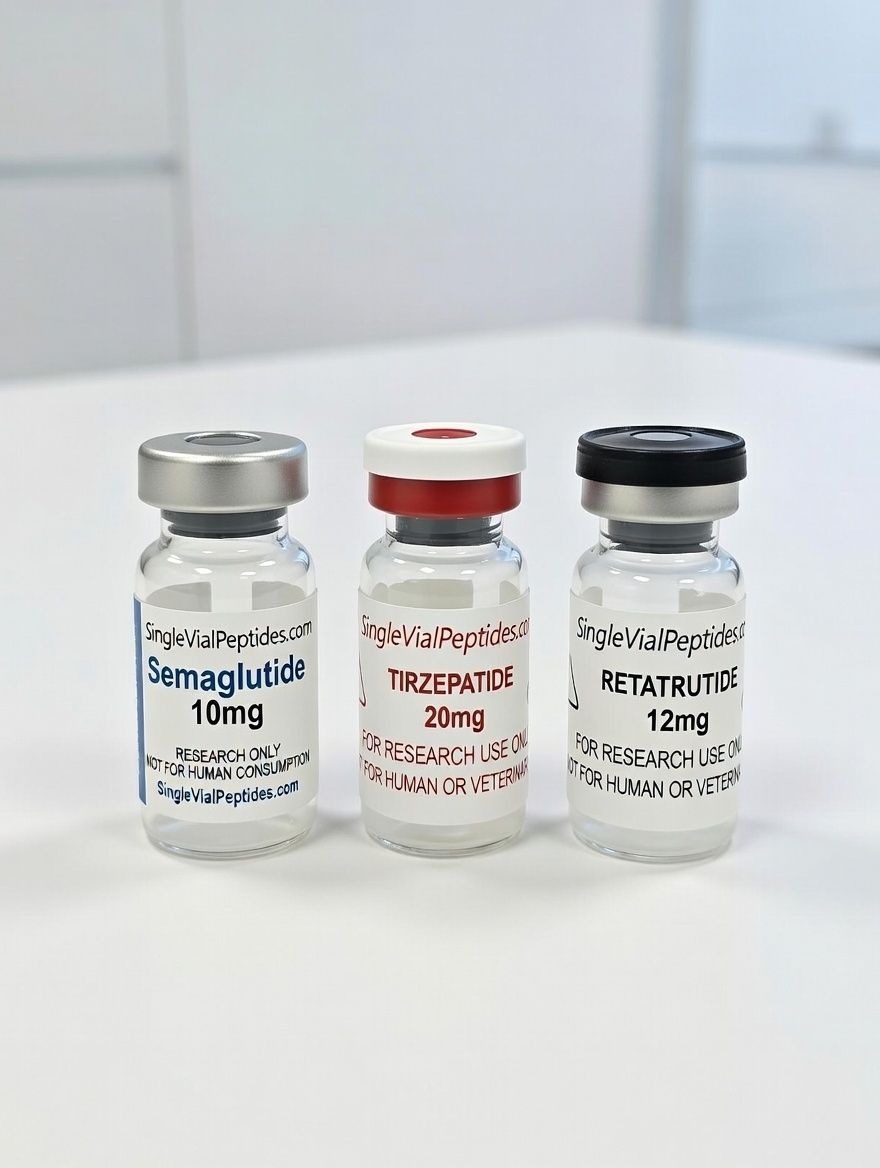
Sports do not share one peptide rule. The list in force for Olympic-movement sport on the day this note was written is the World Anti-Doping Agency's 2026 Prohibited List, valid January 1, 2026. A 2027 list is already published and starts January 1, 2027. Natural bodybuilding federations add their own years on top. A prescription is not a free pass in a tested sport. A research vial is not a clearance to compete.
USADA's 2027 athlete advisory says athletes are "strictly liable," meaning they are responsible for what is in their systems. The same advisory says the Prohibited List is not exhaustive. If a name is missing, USADA tells athletes to check GlobalDRO and their anti-doping organization. This note is not that check.
The gym side of the same story, including why "99 percent of bodybuilders" is not a number this shop will print, is Nobody has counted the bodybuilders.
What the 2026 list actually names
The 2026 list, opened as WADA's English PDF, prohibits the classes below at all times, in and out of competition.
S0, non-approved substances. Any pharmacological substance that is not addressed in a later section, and that has no current approval by any governmental regulatory health authority for human therapeutic use, is prohibited at all times. The examples include drugs under development, discontinued drugs, designer drugs, and substances approved only for veterinary use. The peptide named in that paragraph is BPC-157.
S2.2.3, growth hormone, its analogues and fragments. Named fragments include AOD-9604 and hGH 176-191.
S2.2.4, growth hormone releasing factors. Named examples include CJC-1293, CJC-1295, sermorelin, and tesamorelin. Secretagogues and mimetics include ibutamoren (MK-677) and ipamorelin. GH-releasing peptides include GHRP-2 (pralmorelin), GHRP-6, and examorelin (hexarelin). The class also covers other substances with a similar chemical structure or a similar biological effect.
S2.3, growth factors and growth factor modulators. Named examples include IGF-1 (mecasermin) and its analogues, mechano growth factors, and "Thymosin-β4 and its derivatives e.g. TB-500." The closing line covers other growth factors that affect muscle, tendon, or ligament protein synthesis, vascularisation, energy use, regenerative capacity, or fibre type switching.
S4.4.1, metabolic modulators. Activators of AMP-activated protein kinase include "mitochondrial open reading frame of the 12S rRNA-c (MOTS-c)."
S4.4.2. "Insulins and insulin-mimetics."
S0 substances are Specified substances. S2 substances in this class are non-Specified. USADA's September 17, 2025, sanction of triathlete Anthony McCauley uses that distinction in public: BPC-157 is the Specified substance in S0, and TB-500, CJC-1295, ipamorelin, and tesamorelin are non-Specified substances in the peptide-hormone class. USADA says use and possession of non-Specified substances carries a default sanction of four years. McCauley accepted four years, reduced from an asserted five, with results out from June 1, 2024. He had possessed and used BPC-157 and TB-500 and promoted those plus CJC-1295, ipamorelin, and tesamorelin. The substances were prohibited under the USADA Olympic and Paralympic protocol, the USOPC national anti-doping policies, and the World Triathlon anti-doping rules, because those rules adopt the WADA list.
Tesamorelin is on that S2.2.4 list even though an FDA-approved product, Egrifta, exists for a different use. The shop vial is not Egrifta. That record is Tesamorelin and Egrifta. Sermorelin is also named in S2.2.4. The older brand history is Sermorelin acetate in the record.
Semaglutide and tirzepatide are on a different piece of paper
They are not in the 2026 Prohibited List PDF. They are on the 2026 Monitoring Program, item 6: "Markers of Semaglutide and Tirzepatide: In and Out-of-Competition." WADA's own line on that program, from Code article 4.5, is that the program covers substances which are not on the Prohibited List, so the agency can detect patterns of misuse.
BBC Sport, Tom Grundy and Emma Middleton, September 10, 2026: "Athletes will not be banned from taking weight-loss drugs under the World Anti-Doping Agency's rules for 2027, but the substances will remain on its monitoring list." BBC says semaglutide went on the monitoring list in 2024 and tirzepatide was added in 2026. A substance needs two of three criteria to move onto the banned list: it can enhance performance, it poses a health risk, or it violates the spirit of sport.
Olivier Rabin, WADA's senior director for science and medicine, told BBC Sport that athletes should be "very careful using those drugs and never without medical advice and supervision." He said a loss of muscle mass "may be very counterproductive" for an athlete, and that WADA wants to know whether effects seen in patients with obesity also occur "in non-obese, highly trained people." BBC says a change approved at the next September executive-committee meeting would take effect in January 2028. USADA's 2027 advisory still lists semaglutide and tirzepatide on the monitoring program, and says monitored substances are not prohibited.
BBC also reports a Loughborough University survey of more than 100 sports-medicine physicians in which 12 percent were aware of athletes using GLP-1 drugs with no medical need. That is 12 percent of physicians who had heard of it. It is not 12 percent of athletes.
Retatrutide's name does not appear in the 2026 Prohibited List PDF or the 2026 Monitoring Program PDF opened for this note. It also has no FDA approval. S0's own sentence covers a pharmacological substance that later sections do not address and that no government health authority has approved for human use. An athlete who wants a status on that name has to ask the anti-doping organization. This shop does not sell a brand pen, and retatrutide is still not approved.
January 1, 2027, adds the word "peptides" to S0
USADA's athlete advisory on the 2027 list, which takes effect January 1, 2027, says many peptides that are not approved for human use already fall under S0, or under S2 or S4. Its examples include BPC-157, TB-500, AOD-9604, hGH 176-191, GH-releasing peptides, CJC-1293, thymosin-beta 4, IGF-1 and its analogues, ibutamoren (MK-677), ipamorelin, and insulin.
Then the new sentence: "On the 2027 Prohibited List, 'peptides' in general are now named as prohibited substances in the S0 class. Even if a peptide is not specifically named on the List, utmost caution should be taken, as it may still be prohibited and may be harmful to health." USADA also says not every prohibited peptide is on GlobalDRO, because slang names and experimental peptides exist. S0 remains prohibited at all times.
That advisory describes S0 as any pharmacological substance that does not fall into another WADA category and is not approved for human therapeutic use by any governmental health agency anywhere. The examples it gives are drugs under development or discontinued, designer drugs, peptides, and veterinary-only substances.
Names on this shop that the 2026 PDF does not print
A search of the 2026 Prohibited List PDF did not find GHK, KPV, or NAD as named substances. Absence from the examples is not a permission slip. The list says to ask the anti-doping organization if a substance is not found.
USADA's cosmetics note says most peptides are not prohibited, and it lists "Tripeptide-1 (GHK, non-palmitoylated)" among cosmetic peptide ingredients that are not prohibited. The same note says the list has no route-dependent status for the peptides and growth factors it does prohibit, so a prohibited growth factor in a cream is still prohibited. A research vial of GHK-Cu is not that cream. From January 1, 2027, USADA's newer advisory is the caution on peptides that are not named. Check the current list before a tested season, not this paragraph.
Bodybuilding wrote longer clocks than WADA
WADA's ban is "at all times" while the rule applies to that athlete. Natural bodybuilding adds a look-back.
The WNBF says athletes must be at least 10 years drug-free from peptides, HGH, growth hormones, and the other pharmaceutical hormones on its list before a first competition. A failed urine or polygraph test for peptides, from January 2022, is a lifetime ban from membership privileges. Its growth-hormone section bans "ALL HGH & SYNTHETIC PEPTIDES" unless WADA states otherwise. Named examples include BPC-157, CJC-1295, ipamorelin, sermorelin, hexarelin, GHRP-2, and GHRP-6.
On GLP-1 drugs, the WNBF is stricter than WADA. The page opened here says non-prescribed GLP-1 and related compounds are banned for three months and screened on the polygraph, and "As of January 1, 2027, GLP-1 substances move to a 1 Year ban." A prescribed GLP-1 can be considered only with a diabetes diagnosis and the full chart, not a friendly note. WADA monitoring is not that rule. An athlete in both worlds has to follow the stricter one.
NPC natural contests, rules effective June 1, 2024, use shorter clocks and still ban the class. Peptide hormones and growth factors are 3 years. Insulin used for bodybuilding is 3 years, and prescribed insulin is permitted. Insulin manipulators used only for weight loss are 6 months. The examples printed there are Wegovy, Ozempic, Metformin, and Rybelsus. Open physique shows that do not use this natural rulebook were not opened for this note.
This note also did not open the NFL, NBA, MLB, or an open IFBB Pro drug book. Those leagues can write their own lists. Olympic-movement sport, World Triathlon, the WNBF, and NPC natural shows are the rulebooks quoted above.
What a research vial is not
USADA tells athletes that BPC-157, TB-500, CJC-1295, and ipamorelin are not approved for human clinical use. On the McCauley page, USADA says the FDA has reported safety risks with these and other injectable peptides, "including the potential for immune reactions, cardiac events, and even death." That is USADA's sentence, with its link to the FDA compounding page. It is not a protocol, and it is not a dare.
Nothing here is a dose, a cycle, a way to take a vial, or a way to avoid a test. The vials on this shop are laboratory research material. Adults 21 and older. Not for people or animals. Not a pharmacy. Not medical advice. At least 99 percent pure. Fill within 10 percent of the label. If a tested federation is the audience, the next click is GlobalDRO or that federation's list, not a checkout button.
Forschungsvials. Ab 21. Nicht für Menschen oder Tiere. Kein medizinischer Rat.